Is Papaya Good for Diabetes? GI, Benefits & How to Eat It Safely
For the more than 101 million Indians living with diabetes, one of the most common daily questions is: which fruits can I safely eat? Papaya widely available and affordable often tops that list of doubts.
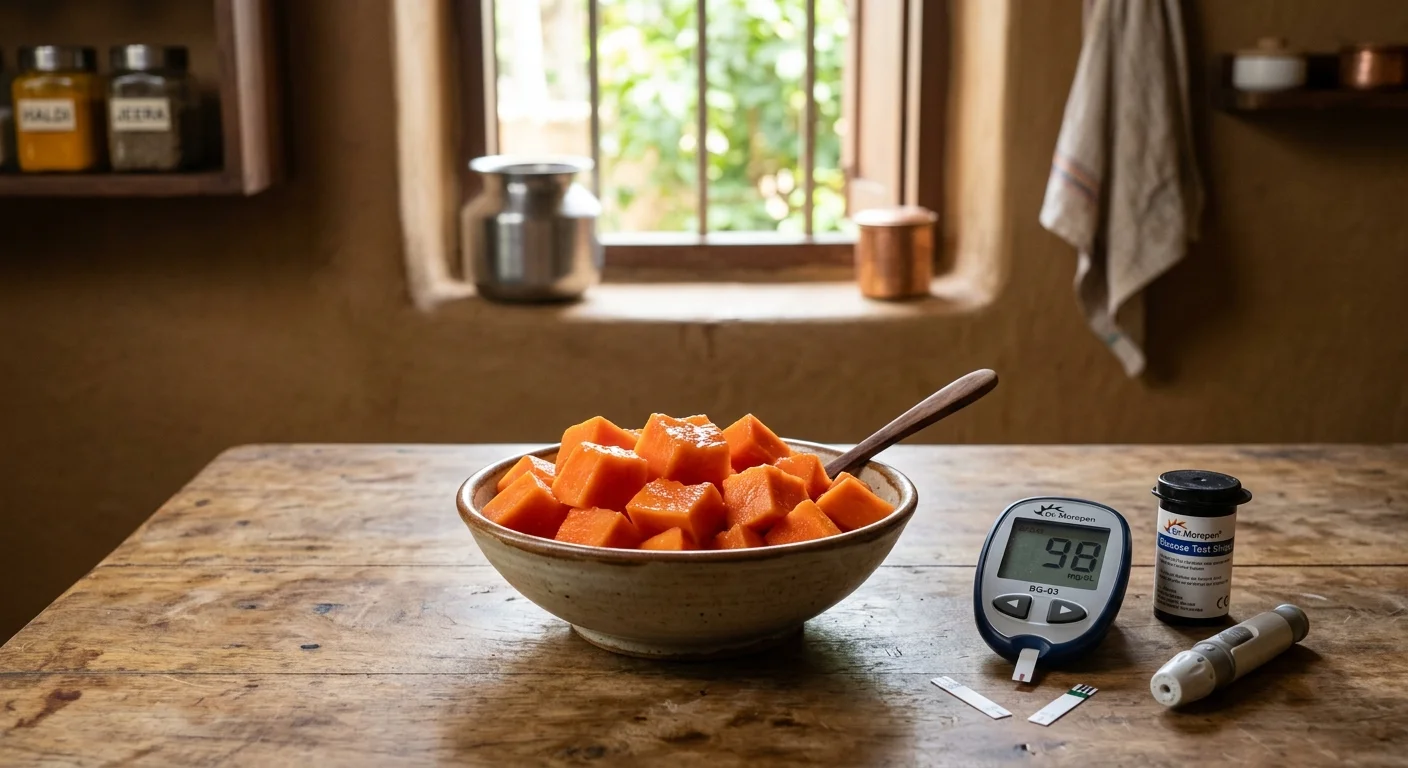
The answer is yes, papaya is generally safe for diabetic patients but only when consumed in the right portion, at the right time, and in the right combination.
Is Papaya Good for Diabetes?
Science supports the inclusion of papaya in a diabetic diet for several reasons:
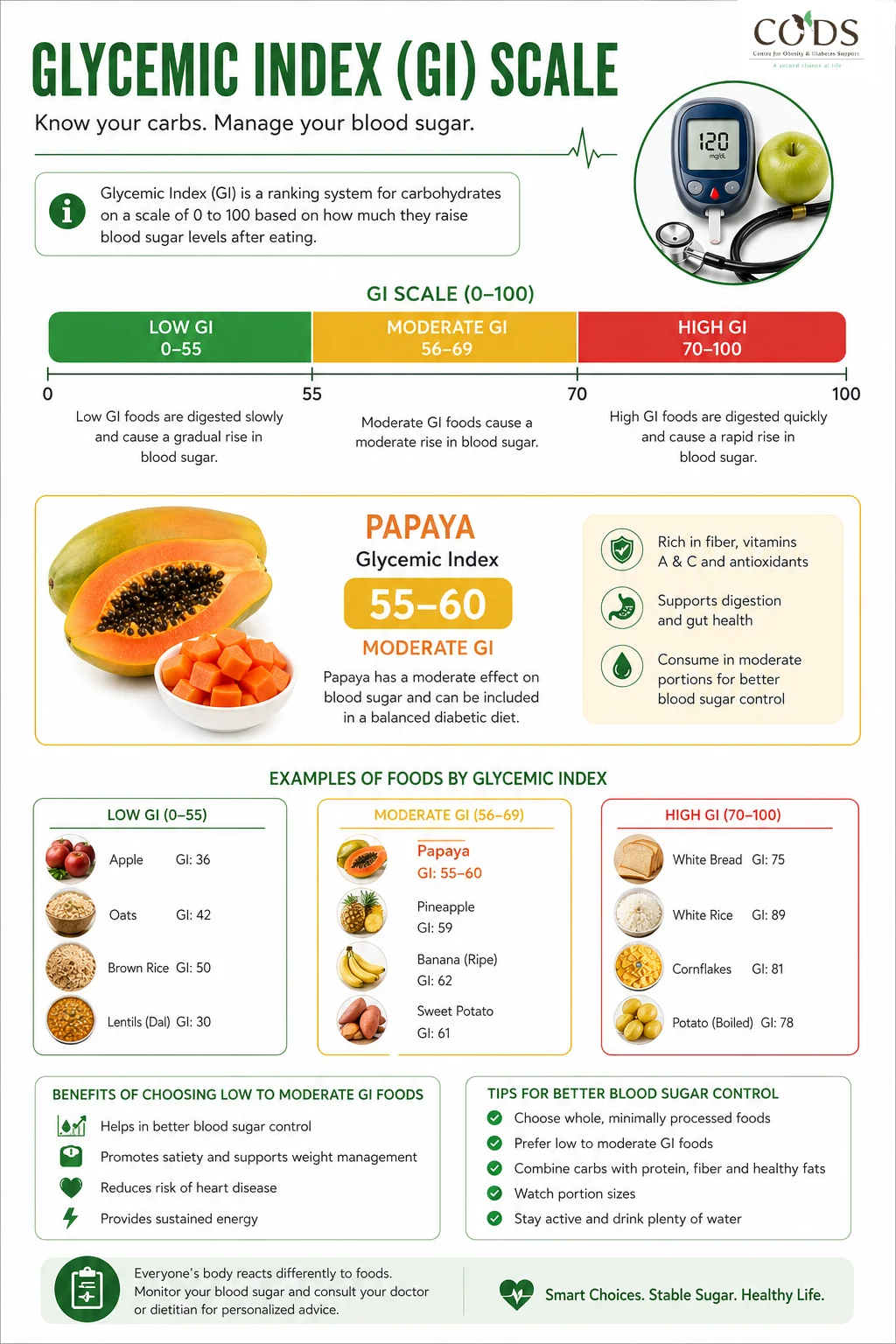
- Moderate Glycemic Index (GI 60): It does not cause a rapid blood sugar spike like high-GI foods.
- Low Glycemic Load (GL ≈ 6): The actual blood sugar impact per 100g serving is very low.
- High Fiber Content: Slows glucose absorption, preventing sharp post-meal spikes.
- Antioxidant Rich: Beta-carotene and flavonoids help reduce the risk of neuropathy and heart disease.
Papaya Glycemic Index vs. Glycemic Load
Understanding the distinction between GI and GL is essential. While GI measures how fast sugar rises, GL measures how much sugar is actually in a standard serving.
Measure | Papaya Value | What It Means for Diabetics |
Glycemic Index (GI) | 55–60 (Moderate) | Safe in controlled portions. |
Glycemic Load (GL) | ~6 (Low) | Low real-world blood sugar impact. |
Carbs per 100g | ~11g | Manageable within a daily calorie budget. |
Fiber per 100g | ~1.7g | Prevents sudden glucose spikes. |
6 Proven Benefits of Papaya for Diabetics
- Regulates Blood Sugar: Fiber ensures a gradual, steady rise in glucose rather than a sharp spike.
- Reduces Oxidative Stress: Potent antioxidants protect against long-term kidney and nerve damage.
- Supports Heart Health: Helps reduce LDL cholesterol and improves arterial flexibility.
- Aids Digestion: The enzyme papain helps with gastroparesis (delayed gastric emptying), common in diabetics.
- Weight Management: Low in calories (~40 kcal/100g) and high in water, it keeps you full longer.
- Strengthens Immunity: Provides 69% of your daily Vitamin C, critical for wound healing.
Can Diabetics Eat Papaya Daily?
Yes, but only in moderation (100–150g per day). Eating large portions daily can increase blood sugar levels.
Is Papaya Better Than Banana for Diabetes?
Papaya has a lower glycemic load compared to banana, making it a safer option for diabetic patients when consumed in controlled portions.
How to Include Papaya in a Diabetic Diet Plan
Papaya should be eaten as a snack, not a dessert. Pairing it with protein (nuts/seeds) helps reduce blood sugar spikes.
For a complete meal structure, refer to a diabetic diet chart India that includes balanced meals, portion control, and proper timing.
How Much and When to Eat
Parameter | Recommendation |
Portion Size | 100–150g (approx. 1 small bowl). |
Frequency | Maximum once daily. |
Best Time | Mid-morning (10–11 AM) or evening snack (4–5 PM). |
Best Pairing | With 5–6 almonds or walnuts to slow sugar absorption. |
What to Avoid
- Papaya Juice: Removes fiber and causes immediate sugar spikes.
- Dried Papaya: Concentrated sugars and often contains added preservatives.
- Overripe Fruit: As papaya softens, its starch converts to simple sugar, raising the GI.
- Post-Meal Dessert: Never eat it immediately after a carb-heavy meal (rice/roti).
Fruit Comparison for Indian Patients
Fruit | GI | GL (per 100g) | Verdict |
Jamun | 25 | ~5 | Excellent (may lower blood sugar) |
Guava | 12-24 | ~3 | Excellent (high fiber) |
Apple | 36-39 | ~5 | Excellent (well tolerated) |
Papaya | 55-60 | ~6 | Good (in moderation) |
Banana | 51-62 | ~12 | Limit (higher sugar density) |
Chiku | ~65 | ~18 | Avoid (very high sugar impact) |
Frequently Asked Questions
Yes, in small portions (100–150g). Overeating can increase blood sugar levels.
Papaya has a glycemic index of around 55–60, which is considered moderate.
Papaya can raise blood sugar if consumed in large quantities or without portion control.
Mid-morning or evening snack is ideal.
Conclusion
Papaya can be a safe and beneficial fruit for diabetic patients when consumed correctly. With a moderate glycemic index and low glycemic load, it does not cause rapid blood sugar spikes when eaten in controlled portions.
However, portion size, timing, and food combinations play a crucial role. Eating papaya as a snack rather than a dessert and pairing it with protein can help maintain stable glucose levels.
For individuals managing diabetes, the goal is not to eliminate fruits but to make informed dietary choices. When included properly, papaya can be part of a balanced and sustainable diabetic diet.
References
- Atkinson FS, et al. International Tables of Glycemic Index Values, Diabetes Care, 2008.