Can Diabetics Eat Mango? Glycemic Index, Benefits & Safe Portion Size
Can Diabetics Eat Mango?
Summer in India means one thing for millions of households — mango season. From Alphonso and Kesar to Dasheri and Langra, mangoes are deeply connected to Indian food culture. But for diabetic patients, this raises an important concern: can diabetics eat mango without causing dangerous blood sugar spikes?
The fear is understandable. Mango is naturally sweet, and many people assume it should be completely avoided in a diabetic diet. However, modern nutrition research shows that the answer is more nuanced. In moderation and with proper portion control, mango can be included safely in many diabetic meal plans.
Understanding the mango glycemic index, portion size, timing, and food combinations is the key. When eaten correctly, mango provides fiber, antioxidants, vitamins, and nutrients that may actually support overall health instead of harming it.
This guide explains everything diabetic patients should know about mango consumption, blood sugar response, safe serving sizes, benefits, risks, and how to enjoy mango safely during the summer season.
Can Diabetics Eat Mango? (Direct Answer)
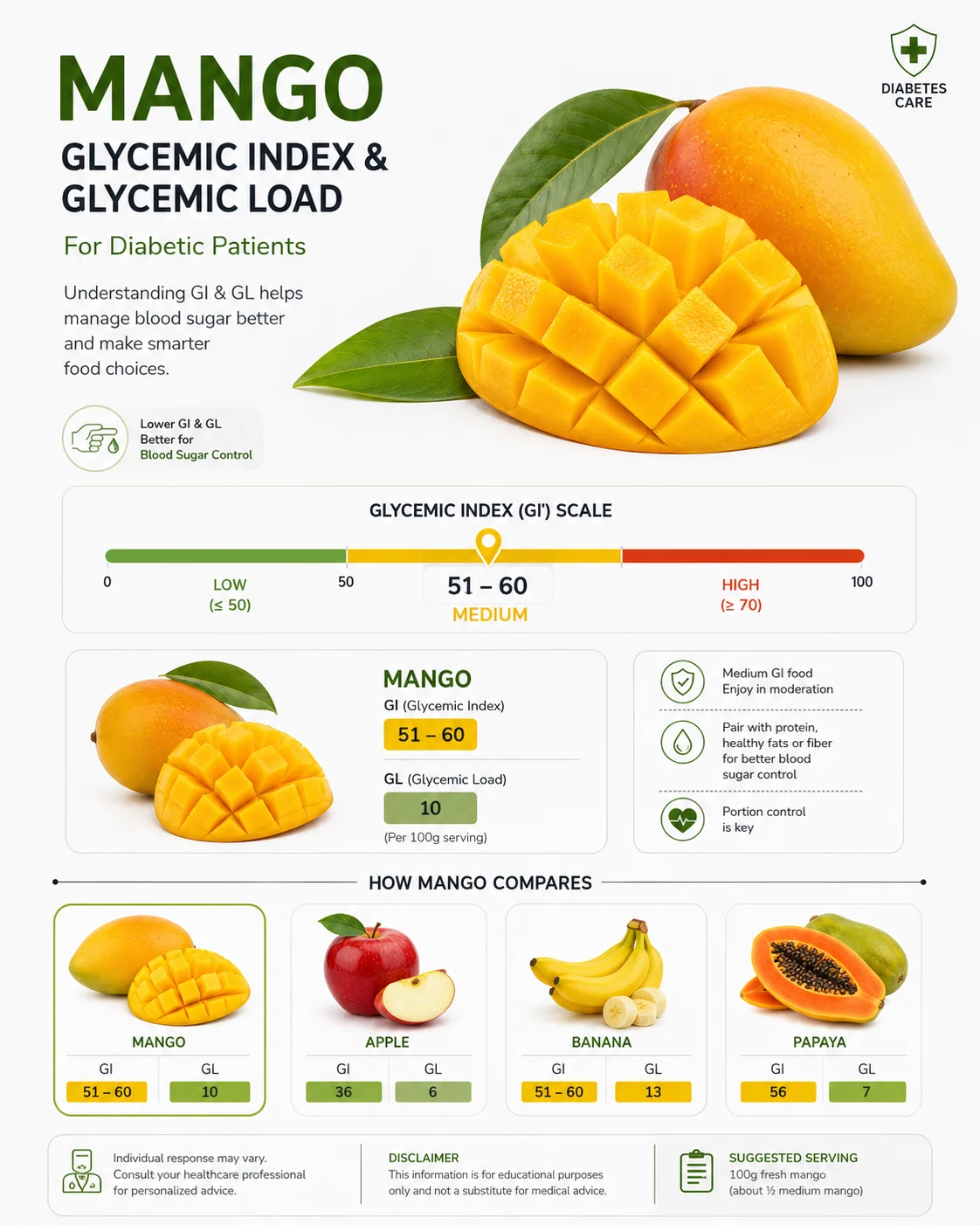
Yes, diabetics can eat mango in moderation. Mango has a moderate glycemic index (GI around 51–60), but its glycemic load remains manageable when consumed in controlled portions. Eating 80–100g of fresh mango alongside fiber or protein can help diabetic patients enjoy mango safely without causing major blood sugar spikes.
Understanding Mango and Diabetes
Diabetes management is not about eliminating every sweet food from the diet. Instead, it focuses on:
- Portion control
- Glycemic response
- Total carbohydrate intake
- Food combinations
- Meal timing
Many fruits contain natural sugar, but they also provide nutrients that processed sugary foods do not.
Mango contains:
- Fiber
- Vitamin C
- Vitamin A
- Antioxidants
- Polyphenols
These nutrients may support immunity, digestion, skin health, and inflammation control.
The real issue is not whether mango contains sugar it is how much mango is consumed and how the body responds to it.
Mango Glycemic Index Explained
What Is the Glycemic Index?
The glycemic index (GI) measures how quickly a food raises blood sugar levels after consumption.
Foods are categorized as:
The mango glycemic index usually falls between 51 and 60, depending on ripeness and variety.
That means mango is considered:
- Low-to-moderate GI
- Safer than many processed desserts
- Better than sugary drinks or sweets
Mango Glycemic Load Matters More
While GI measures speed, glycemic load (GL) measures actual blood sugar impact per serving.
Mango Nutrition Per 100g
Nutrient |
Approximate Value |
|---|---|
A glycemic load below 10 is considered low.
This is why diabetic patients can often consume mango safely in small quantities.
Can Diabetics Eat Mango Daily?
This depends on:
- Blood sugar control
- Portion size
- Activity level
- Overall carbohydrate intake
- Type of diabetes
For many patients with controlled diabetes:
Small servings of mango occasionally are acceptable.
However:
Large quantities daily can increase glucose fluctuations.
The safest approach is moderation.
Benefits of Mango for Diabetic Patients
1. Rich in Fiber
Fiber slows glucose absorption into the bloodstream.
This helps:
- Reduce sudden sugar spikes
- Improve digestion
- Increase fullness
Fiber is one reason why whole mango is safer than mango juice.
2. High in Antioxidants
Mango contains:
- Mangiferin
- Beta-carotene
- Polyphenols
These compounds may help reduce oxidative stress, which is strongly associated with diabetes complications.
3. Supports Immunity
Vitamin C in mango helps:
- Strengthen immunity
- Improve wound healing
- Support skin health
This is important because diabetic patients may heal more slowly.
4. Helps Control Cravings
Many diabetic patients struggle with sugar cravings.
A small portion of mango may:
- Satisfy sweet cravings naturally
- Reduce junk food consumption
- Improve dietary adherence
5. May Support Heart Health
People with diabetes are at increased risk of heart disease.
Mango contains potassium and antioxidants that may support cardiovascular health when consumed responsibly.
Risks of Eating Too Much Mango in Diabetes
While diabetics can eat mango, excessive intake may create problems.
1. Blood Sugar Spikes
Overeating mango can:
- Increase glucose rapidly
- Raise HbA1c over time
- Disrupt diabetic control
2. Mango Shakes and Juices Are Risky
Liquid calories absorb quickly.
Avoid:
- Mango milkshakes
- Mango juice
- Packaged mango drinks
These remove fiber and increase sugar load dramatically.
3. Overripe Mangoes Have Higher Sugar Availability
As mango ripens:
- Starch converts into sugar
- Sweetness increases
- Glycemic response may rise
Choose moderately ripe mangoes instead of extremely soft ones.
Best Way for Diabetics to Eat Mango
Safe Mango Eating Tips
Limit Portion Size
Stick to:
- 80–100g mango
- About half a cup
Eat Mango as a Snack
Best timing:
- Mid-morning
- Evening snack
Avoid eating mango:
- Late at night
- Immediately after heavy meals
Pair Mango with Protein or Healthy Fat
Good combinations:
- Mango + almonds
- Mango + walnuts
- Mango + Greek yogurt
This slows sugar absorption.
Choose Fresh Mango
Fresh fruit is far safer than:
- Packaged pulp
- Ice creams
- Syrups
Mango should always be part of a balanced diabetic meal plan rather than consumed excessively in isolation. You can also explore our complete Indian diabetic diet chart for structured meal planning ideas.
Comparison: Mango vs Other Fruits for Diabetes
Fruits like papaya, guava, and apples are often easier to manage in a diabetic diet due to their lower glycemic load. If you want a detailed breakdown, read our guide on whether is papaya good for diabetes.
Which Mango Variety Is Better for Diabetics?
Different mango varieties contain slightly different sugar concentrations.
Better Options
- Smaller portions of Alphonso
- Kesar in moderation
- Raw mango preparations (limited sugar)
Avoid Excessively Sweet Preparations
- Mango desserts
- Mango syrup
- Mango ice cream
- Mango lassi with sugar
Real-World Example
A 48-year-old patient with Type 2 diabetes wanted to avoid mango completely during summer due to fear of sugar spikes.
After dietary assessment:
- Portion reduced to 80g
- Combined with nuts
- Avoided post-dinner consumption
Result:
- Stable post-meal glucose readings
- Better diet adherence
- Reduced junk dessert cravings
This highlights that diabetic management is often about smart dietary adjustments rather than complete restriction.
Step-by-Step Guide: How Diabetics Can Safely Eat Mango
Step 1: Check Blood Sugar Control
Patients with uncontrolled diabetes should consult a doctor first.
Step 2: Measure Portion Properly
Avoid guessing.
Use:
- Small bowl
- Kitchen scale if needed
Step 3: Avoid Pairing with Heavy Carbs
Do not combine mango with:
- Large rice meals
- Sweets
- Sugary drinks
Step 4: Monitor Glucose Response
If possible:
- Check sugar 1–2 hours after eating
This helps understand personal tolerance.
Step 5: Keep Frequency Moderate
2–3 times weekly is safer than daily overconsumption.
Foods That Pair Well with Mango for Diabetics
Good Pairings
- Nuts
- Seeds
- Yogurt
- Protein-rich snacks
Poor Pairings
- Ice cream
- Sweet yogurt
- Sugary cereals
- Sweet beverages
Common Myths About Mango and Diabetes
Myth 1: Diabetics Can Never Eat Mango
False.
Moderate intake is usually acceptable.
Myth 2: Natural Sugar Is Unlimited
False.
Natural sugar still affects blood glucose.
Myth 3: Mango Juice Is Healthy for Diabetics
Usually false.
Juice removes fiber and increases sugar absorption speed.
Can Pre-Diabetic Patients Eat Mango?
Yes, but portion control remains important.
Patients with:
- Insulin resistance
- Prediabetes
- Metabolic syndrome
should focus on:
- Controlled serving size
- Weight management
- Balanced meals
Obesity and insulin resistance are closely connected, which is why maintaining a healthy body weight is critical for long-term diabetes prevention. Read more about obesity causes and treatment options in India.
When Should Diabetics Avoid Mango?
Patients should limit or avoid mango if:
- Blood sugar is poorly controlled
- HbA1c remains consistently high
- Doctor advises carb restriction
- They consume excessive portions regularly
Related Diabetes Diet Topics
Internal linking opportunities:
- Diabetic diet chart India
- Is papaya good for diabetes
- Breakfast for diabetic patients
- Best fruits for diabetes
- Snacks for diabetic patients
Frequently Asked Questions
Small portions occasionally may be safe, but daily overconsumption can increase blood sugar levels.
The mango glycemic index generally ranges from 51–60, placing it in the moderate GI category.
No specific variety is completely diabetic-safe. Portion control matters more than variety.
Raw mango contains less available sugar compared to fully ripe mango, but intake should still remain moderate.
Mango juice is not recommended because it lacks fiber and can cause rapid sugar spikes.
Most diabetic patients can safely consume around 80–100g of fresh mango occasionally.
Fresh mango is generally healthier than processed desserts because it contains fiber and nutrients, but moderation remains essential.
Conclusion
So, can diabetics eat mango?
The answer is yes but responsibly.
Mango is not the enemy for diabetic patients. In fact, when consumed in controlled portions and paired with balanced meals, mango can be part of a healthy diabetic diet. The key lies in understanding the mango glycemic index, monitoring portion size, and avoiding processed mango products that contain excessive sugar.
Instead of completely eliminating enjoyable foods, diabetic management should focus on smarter eating patterns, moderation, and long-term sustainability.