Is Curd Good for Diabetes? Benefits, Risks & Best Time to Eat It
If you have diabetes, you’ve probably wondered whether everyday foods like curd (dahi) are safe to include in your diet. Since curd is a staple in many Indian households, this question comes up frequently: Is Curd Good for Diabetes?
The good news is that plain, unsweetened curd can be a healthy addition to a diabetes-friendly diet. It provides protein, probiotics, calcium, and other nutrients that may help support blood sugar management, digestive health, and satiety. However, the type of curd, portion size, and what you eat with it all matter.
In this guide, you’ll learn whether curd is good for diabetes, its nutritional benefits, the best time to eat it, potential risks, and practical tips for including curd in a balanced diabetic diet.
Direct Answer: Is Curd Good for Diabetes?
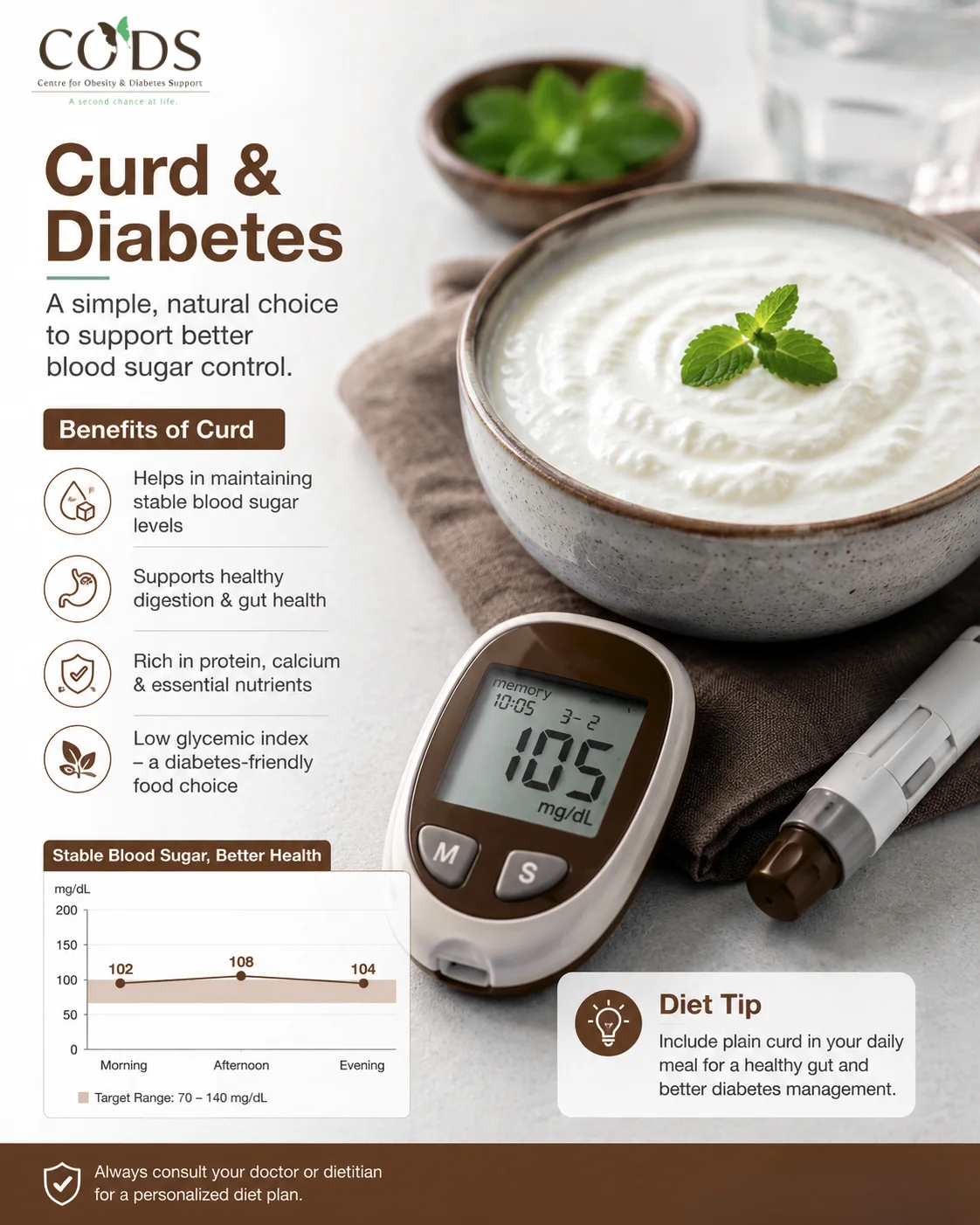
Yes, plain unsweetened curd is generally considered good for diabetes when consumed in moderation. It is rich in protein, contains beneficial probiotics, and has a relatively low glycemic index, meaning it does not usually cause rapid blood sugar spikes. Choosing homemade or plain curd without added sugar is typically the healthiest option.
Nutritional Value of Curd
Curd is a nutrient-dense food that provides several important vitamins and minerals.
Approximate Nutritional Value Per 100g of Plain Curd
Nutrient |
Amount |
|---|---|
Calories
|
60–100 kcal
|
Protein
|
3–4g
|
Carbohydrates
|
4–5g
|
Fat
|
3–5g
|
Calcium
|
120–150mg
|
Probiotics
|
Present
|
The exact values vary depending on whether the curd is homemade, low-fat, full-fat, or commercially produced.
Why Is Curd Good for Diabetes?
Several characteristics make curd a beneficial food choice for people with diabetes.
1. Low Glycemic Index
One reason Is Curd Good for Diabetes is a common question is because people worry about blood sugar spikes.
Curd generally has a low glycemic index, which means:
- slower digestion
- gradual glucose release
- reduced blood sugar fluctuations
This makes it a more favorable choice than sugary snacks or processed foods.
2. Rich in Protein
Protein plays a key role in diabetes management.
Benefits include:
- improved satiety
- reduced cravings
- slower digestion
- better meal balance
Adding curd to meals may help you feel full for longer and reduce overeating.
3. Supports Gut Health
Curd contains probiotics beneficial bacteria that support digestive health.
Research suggests that gut health may influence:
- insulin sensitivity
- inflammation
- metabolic health
Although probiotics are not a cure for diabetes, they may contribute to overall wellness.
4. May Help With Weight Management
Maintaining a healthy weight is often important for people with Type 2 diabetes.
Curd can support weight management because it is:
- filling
- protein-rich
- relatively low in calories
Replacing high-calorie desserts with curd may help reduce overall calorie intake.
5. Provides Essential Nutrients
Curd is a good source of:
- calcium
- phosphorus
- vitamin B12
- potassium
These nutrients contribute to overall health and support normal body functions.
Does Curd Increase Blood Sugar?
This is one of the most searched questions related to diabetes and curd.
For most people, plain curd does not cause a significant blood sugar spike because:
- it contains protein
- it has relatively low carbohydrates
- it digests more slowly than refined carbohydrate foods
However, sweetened curd products may have a different effect because they often contain added sugar.
Plain Curd vs Flavored Yogurt for Diabetes
Not all dairy products are equal.
Feature |
Plain Curd |
Flavored Yogurt |
|---|---|---|
Added Sugar
|
No
|
Often Yes
|
Protein
|
Moderate
|
Moderate
|
Blood Sugar Impact
|
Lower
|
Higher
|
Diabetes Friendly
|
Yes
|
Usually Less Suitable
|
Artificial Additives
|
Minimal
|
May Contain
|
For diabetes management, plain curd is usually the better choice.
Best Time to Eat Curd for Diabetes
Many people ask whether there is an ideal time to consume curd.
Good Times to Eat Curd
With Lunch
Combining curd with:
- vegetables
- dal
- rice
may help create a balanced meal.
As a Healthy Snack
Curd can be paired with:
- chia seeds
- flaxseeds
- nuts
for a satisfying snack.
At Breakfast
Curd can be included with:
- oats
- fruits
- seeds
for a nutrient-rich breakfast.
Read Our Guide Breakfast for Diabetic Patients
Can Diabetics Eat Curd at Night?
Many people believe curd should never be eaten at night.
From a diabetes perspective, there is generally no strong evidence that plain curd is harmful at night for most people.
However, some individuals may experience:
- digestive discomfort
- bloating
- personal intolerance
If curd suits your digestion, moderate nighttime consumption is usually acceptable.
Homemade Curd vs Store-Bought Curd
Both can be suitable, but there are differences.
Homemade Curd
Advantages:
- fewer additives
- fresher preparation
- easier ingredient control
Store-Bought Curd
Advantages:
- convenient
- consistent quality
When buying packaged curd:
- check labels
- avoid added sugar
- avoid flavored varieties
Benefits of Eating Curd for Diabetes
Let’s summarize the major advantages.
Potential Benefits
- Supports blood sugar management
- Provides protein
- Contains probiotics
- Promotes satiety
- Supports digestive health
- Provides calcium
- May assist with weight management
Are There Any Risks?
Building trust requires discussing limitations.
Potential Considerations
Portion Size Matters
Even healthy foods can contribute to excess calorie intake if consumed excessively.
Flavored Products Can Be Misleading
Some products marketed as “healthy” may contain:
- added sugars
- sweeteners
- artificial flavors
Lactose Intolerance
Some individuals may experience:
- bloating
- gas
- digestive discomfort
Individual Responses Vary
People with diabetes can respond differently to foods.
Monitoring blood glucose remains important.
How to Include Curd in a Diabetes-Friendly Diet
Step 1: Choose Plain Unsweetened Curd
Avoid:
- sweetened curd
- fruit-flavored yogurt
- dessert-style dairy products
Step 2: Watch Portions
A typical serving:
- 100–200g
may fit into many diabetes meal plans.
Step 3: Pair It With Fiber
Examples:
- cucumber
- vegetables
- seeds
Fiber helps improve meal balance.
Step 4: Include Protein-Rich Meals
Curd works well alongside:
- paneer
- dal
- eggs
Step 5: Monitor Blood Sugar
Track how your body responds and adjust as needed.
Real-World Example
A 48-year-old man with Type 2 diabetes often ended lunch with sweets.
After switching to:
- plain homemade curd
- cucumber raita
- unsweetened dahi
he found it easier to manage cravings and felt fuller after meals.
While individual results vary, replacing sugary desserts with nutrient-dense foods may support healthier eating habits.
Curd and Diabetes: What the Research Suggests
Research on fermented dairy foods suggests that yogurt and curd may be associated with positive metabolic outcomes when included as part of a balanced diet.
Potential areas of interest include:
- gut microbiome health
- satiety
- dietary quality
However, curd should be viewed as one component of an overall healthy eating pattern not a standalone solution.
Helpful Tools for Diabetes Management
Useful tools include:
- glucometers
- continuous glucose monitors (CGMs)
- meal tracking apps
- food diaries
- nutrition tracking platforms
These tools can help identify how foods such as curd fit into your individual diabetes management plan.
Frequently Asked Questions
Yes, plain unsweetened curd is generally considered a healthy food for people with diabetes because it provides protein, probiotics, and has a relatively low glycemic impact.
Many diabetics can include moderate amounts of plain curd daily as part of a balanced diet, depending on their individual nutritional needs.
Plain curd typically causes only a modest increase in blood sugar because it contains protein and relatively low amounts of carbohydrates.
Curd can be consumed with meals, at breakfast, or as a healthy snack. The best time depends on personal preference and dietary patterns.
Many people with diabetes can consume curd at night in moderation, provided it does not cause digestive discomfort.
Homemade curd often contains fewer additives and allows better control over ingredients, although both can be suitable if unsweetened.
Curd may support weight management because it is filling, protein-rich, and can help reduce cravings when included in a balanced diet.
Conclusion
So, Is Curd Good for Diabetes? For most people, the answer is yes. Plain, unsweetened curd can be a nutritious addition to a diabetes-friendly diet because it provides protein, probiotics, calcium, and a relatively low glycemic impact.
The key is choosing the right type of curd, avoiding added sugars, controlling portions, and incorporating it into a balanced meal plan. Whether enjoyed at breakfast, as a snack, or alongside lunch, curd can be a practical and versatile food choice for many people living with diabetes.
Combined with healthy eating habits, regular physical activity, and medical guidance, curd can play a supportive role in long-term diabetes management.