100g Paneer Calories: Protein, Fat & Nutrition Facts
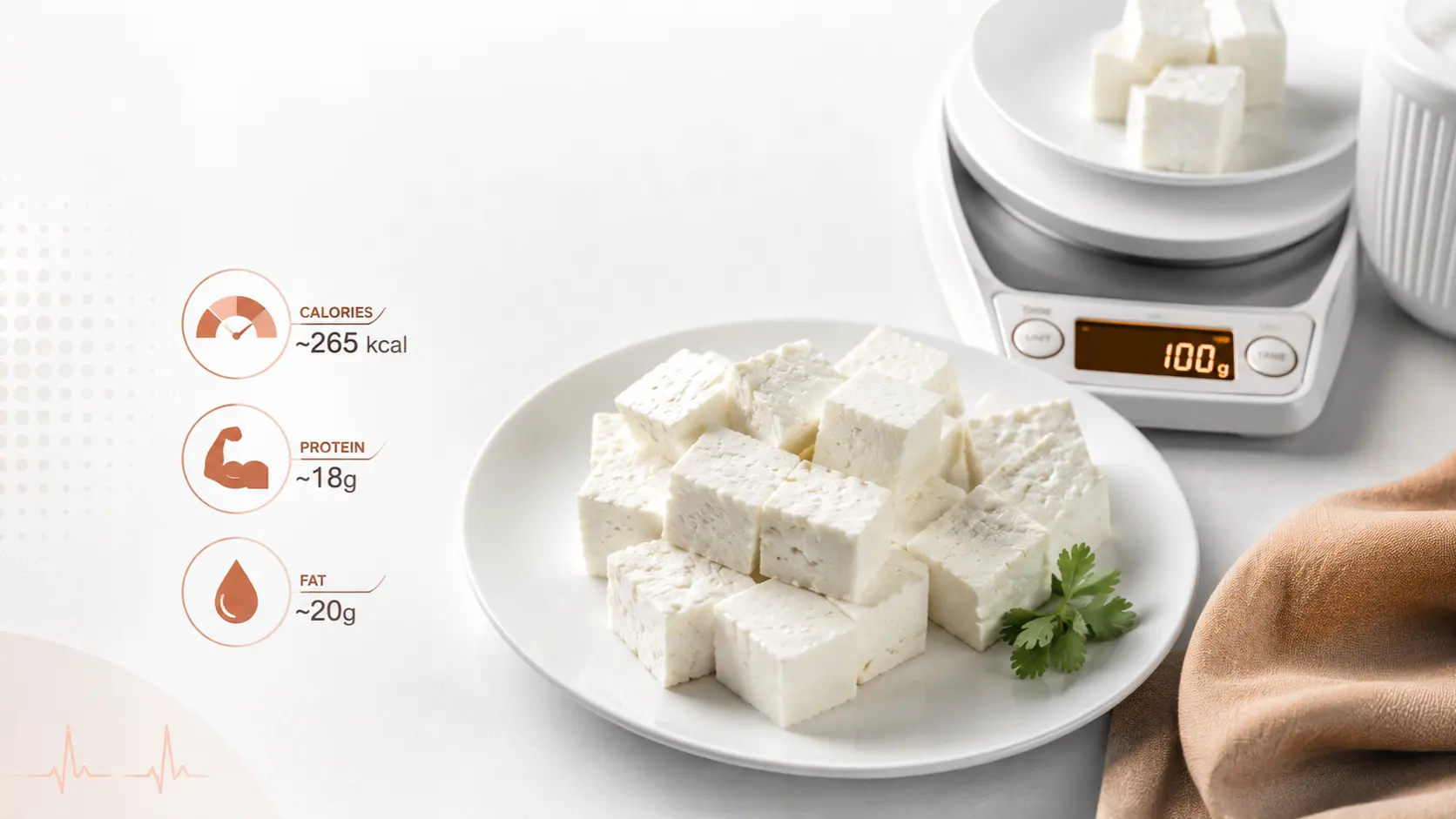
100g paneer typically contains around 250–320 calories, depending on the milk used and preparation method. Full-fat paneer is generally higher in calories and fat, while low-fat paneer can contain considerably fewer calories. For accurate calorie tracking, check the nutrition label of your specific paneer or calculate it from the recipe.
What Are the 100g Paneer Calories?
When people search for 100g paneer calories, they usually want a quick answer for calorie tracking, weight management or meal planning.
A practical estimate for regular full-fat paneer is approximately 250–320 calories per 100g.
However, paneer doesn’t have one fixed nutritional profile.
The calorie content can vary according to:
- Type of milk used
- Milk fat percentage
- Homemade vs packaged paneer
- Amount of moisture retained
- Preparation method
- Brand
- Whether additional oil or ghee is used
For this reason, packaged paneer should ideally be measured using the nutrition information provided by the manufacturer.
Paneer Nutrition Per 100g
A typical full-fat paneer can provide substantial amounts of fat and protein.
Nutrient |
Approximate amount per 100g* |
|---|---|
Calories
|
~250–320 kcal
|
Protein
|
~18–21g
|
Fat
|
~20–25g
|
Carbohydrates
|
~2–4g
|
Calcium
|
Variable
|
Sodium
|
Variable
|
*Values are approximate and vary considerably between products and preparation methods.
This makes paneer a relatively protein-rich, low-carbohydrate food, but regular full-fat paneer can also be calorie-dense because of its fat content.
Why Do Paneer Calories Vary?
Two blocks of paneer can look almost identical but have different nutritional values.
Full-fat paneer
Made using higher-fat milk, this type generally contains more:
- Calories
- Total fat
- Saturated fat
Low-fat paneer
Made using lower-fat milk, it may provide:
- Fewer calories
- Less total fat
- Similar or sometimes substantial protein
However, the exact difference depends on how the product is manufactured.
Homemade paneer
Homemade paneer can vary even more.
The final nutrition depends on:
- Milk type
- Milk quantity
- Fat percentage
- How much whey is removed
- Final paneer weight
Therefore, simply saying that “100g paneer always contains X calories” isn’t nutritionally precise.
100g Paneer Calories and Protein
One reason paneer is popular in Indian diets is its protein content.
Approximately 18–21g of protein per 100g is a reasonable general range for many regular paneer products, although the exact amount varies.
Protein contributes to several important functions in the body and can also help with satiety as part of an overall balanced diet.
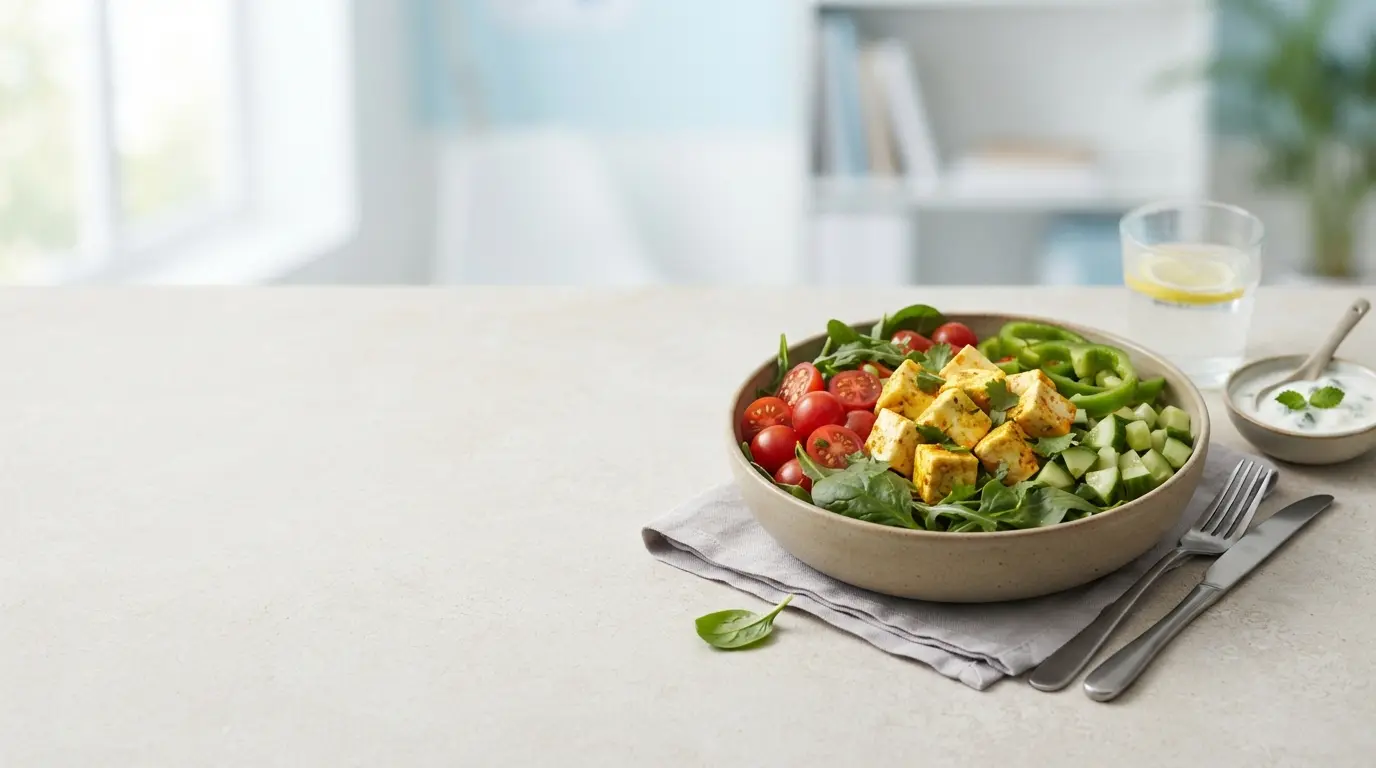
Paneer can therefore be useful in meals where you want to combine:
Protein + vegetables + a moderate carbohydrate portion
For example:
- Paneer + vegetables + roti
- Paneer + salad + dal
- Paneer + vegetables + a moderate rice portion
The complete meal matters more than the paneer alone.
Is Paneer High in Fat?
Regular paneer can be relatively high in fat.
This is particularly important when you’re calculating 100g paneer calories for weight loss.
Fat contains more calories per gram than protein or carbohydrates.
Therefore, a paneer product containing a substantial amount of fat can provide considerably more calories than a low-fat paneer product.
This doesn’t make paneer unhealthy.
Instead, it means portion size and preparation matter.
A 100g serving of plain paneer is very different from:
100g paneer + oil + cream + butter + rich gravy
The second dish can contain significantly more calories.
Is Paneer Good for Weight Loss?
Paneer can fit into a weight-loss diet.
The key issue is not whether paneer is automatically “good” or “bad” for weight loss. What matters is how it fits into your overall calorie and protein intake.
Paneer can be useful because it provides protein and can be satisfying.
However, full-fat paneer is also calorie-dense.
If your goal is weight management, practical strategies include:
- Control the portion
- Choose lower-fat paneer when appropriate
- Avoid deep-frying it
- Limit heavy cream-based gravies
- Add plenty of vegetables
- Account for cooking oil
- Consider the complete meal
Example
A meal containing:
100g paneer + vegetables + salad
is nutritionally different from:
100g fried paneer + creamy gravy + butter naan + sugary drink
The paneer itself is only one part of the calorie equation.
Is Paneer Good for Diabetes?
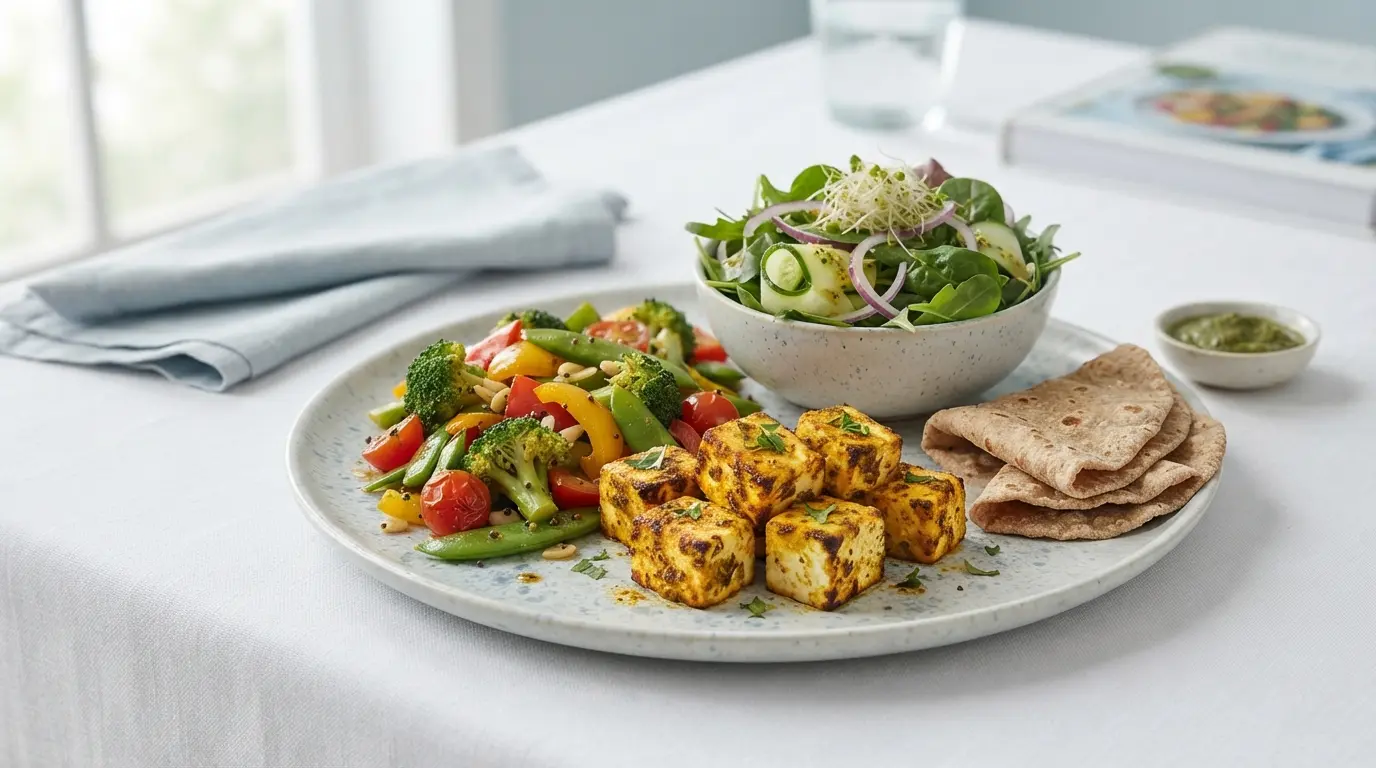
Paneer is relatively low in carbohydrates, which makes it different from many carbohydrate-rich foods.
However, low carbohydrate does not mean unlimited quantities are appropriate.
For someone with diabetes, meal planning should consider:
- Total carbohydrate intake
- Protein
- Fat
- Portion size
- Overall calorie intake
- The rest of the meal
- Individual blood glucose response
Plain paneer can be included in many balanced meals, but a paneer dish prepared with large amounts of oil, butter or refined carbohydrates can have a very different nutritional profile.
For individualized diabetes nutrition advice, speak with a qualified healthcare professional or registered dietitian.
You can also read our detailed guide on Is Paneer Good for Diabetes? as an internal resource.
Paneer vs Other Indian Protein Sources
Paneer isn’t the only way to obtain protein.
Food |
Main nutritional characteristic |
|---|---|
Paneer
|
Protein + substantial fat in full-fat versions
|
Dal
|
Protein + carbohydrate + fibre
|
Chana
|
Protein + carbohydrate + fibre
|
Rajma
|
Protein + carbohydrate + fibre
|
Tofu
|
Protein with generally less saturated fat than full-fat paneer
|
Eggs
|
Protein + fat
|
Curd
|
Protein + varying amounts of fat/carbohydrate
|
There is no single “best” protein source for everyone.
The appropriate choice depends on dietary preferences, calorie requirements, nutritional goals and individual health considerations.
100g Paneer Calories vs Tofu
This is a particularly useful comparison for people interested in weight management.
Factor |
Paneer |
Tofu |
|---|---|---|
Protein
|
Generally high
|
Generally high
|
Fat
|
Often higher
|
Often lower, depending on type
|
Carbohydrates
|
Low
|
Low
|
Calories
|
Can be relatively high
|
Often lower, depending on variety
|
Dairy-free
|
No
|
Yes
|
Vegetarian
|
Yes
|
Yes
|
The exact nutrition varies significantly by brand.
If calories are your primary concern, compare the nutrition labels per 100g rather than relying on generic internet values.
Is 100g Paneer a Lot?
There is no universal serving size that applies to everyone.
For some people, 100g may be a reasonable portion.
For others, 50–75g may fit better into a calorie-controlled meal.
Your appropriate portion depends on:
- Daily calorie needs
- Protein requirements
- Body size
- Activity level
- Weight goals
- The rest of the meal
A useful approach is to think about paneer as one component of a complete plate rather than eating it independently.
How Many Calories Are in Homemade Paneer?
Homemade paneer is particularly difficult to assign a universal calorie number to.
Suppose you make paneer using whole milk.
The final paneer retains some of the milk’s fat and protein, while some components leave with the whey.
The final calorie density depends on how much paneer you obtain from the milk.
For more accurate tracking:
- Measure the quantity of milk used.
- Record its nutrition information.
- Prepare the paneer.
- Weigh the final paneer.
- Calculate the approximate nutrition per 100g.
This will provide a much more useful estimate than using a generic value.
Does Cooking Paneer Increase Calories?
Cooking paneer itself doesn’t necessarily add calories.
However, the cooking method can dramatically change the final calorie content.
Grilled paneer
If cooked without substantial added fat, its calorie content may remain relatively close to the paneer’s original nutritional value.
Fried paneer
Absorbed oil can increase the total calories.
Paneer butter masala
The paneer is combined with ingredients such as:
- Butter
- Cream
- Oil
- Cashews
The resulting dish can contain substantially more calories than plain paneer.
Paneer tikka
Depending on preparation, this may contain moderate calories, but marinades and cooking oil still matter.
When tracking calories, count the complete recipe, not simply the paneer.
How to Include Paneer in a Balanced Meal
A simple meal structure could look like:
Protein
Paneer
Vegetables
Broccoli, capsicum, spinach, beans, cauliflower or mixed vegetables
Carbohydrate
A moderate portion of:
- Roti
- Brown rice
- White rice
- Millets
- Other whole-food carbohydrate sources
Healthy fats
Small quantities of nuts, seeds or cooking oil, depending on your overall dietary requirements.
This creates a more balanced meal than relying on a large amount of paneer alone.
Common Mistakes When Counting Paneer Calories
1. Using One Generic Number
Different paneer products have different calorie values.
Always check the label when possible.
2. Forgetting Cooking Oil
One of the biggest sources of hidden calories is added oil.
3. Confusing Paneer With the Finished Dish
“Paneer calories” and “paneer curry calories” aren’t the same thing.
4. Ignoring Portion Size
Even nutritious foods contribute calories.
5. Looking Only at Calories
Also consider:
- Protein
- Fat
- Saturated fat
- Sodium
- Overall meal composition
How to Calculate Calories in Your Paneer Portion
If your paneer label says:
300 calories per 100g
Then approximately:
Portion |
Calories |
|---|---|
25g
|
75 kcal
|
50g
|
150 kcal
|
75g
|
225 kcal
|
100g
|
300 kcal
|
150g
|
450 kcal
|
200g
|
600 kcal
|
These calculations assume the same nutritional density throughout the product.
The same approach can be used for protein and fat.
How to Choose Paneer When Buying It
If you’re buying packaged paneer, look at the nutrition label.
Check:
1. Calories
Compare products per 100g.
2. Protein
A higher protein content can be useful depending on your goals.
3. Total fat
Especially important if you’re following a calorie-controlled diet.
4. Saturated fat
Consider this alongside your overall dietary pattern.
5. Ingredients
A simpler ingredient list may be preferable depending on the product.
6. Serving size
Don’t assume the package’s stated serving size is the same as 100g.
Frequently Asked Questions
100g of paneer typically contains around 250–320 calories, although the exact value varies significantly depending on the milk used, fat content, moisture and brand.
Many regular paneer products contain approximately 18–21g of protein per 100g, but the exact amount varies by product.
Paneer can be included in a weight-loss diet because it provides protein, but full-fat paneer can also be calorie-dense. Portion size and the way paneer is prepared are important.
Paneer is relatively low in carbohydrates and can fit into many diabetes-conscious meals. However, portion size, total calories, fat and the rest of the meal should also be considered.
Low-fat paneer can contain fewer calories than regular full-fat paneer, which may make it easier to fit into a calorie-controlled diet. Compare nutrition labels to determine the actual difference.
Yes. Frying paneer can increase the total calorie content because the paneer may absorb cooking oil. The amount depends on the cooking method and quantity of oil used.
If a paneer product contains 300 calories per 100g, then 50g would contain approximately 150 calories. Always calculate from the nutrition label of your specific product.