Walking After Dinner Benefits: Why a Short Walk May Help
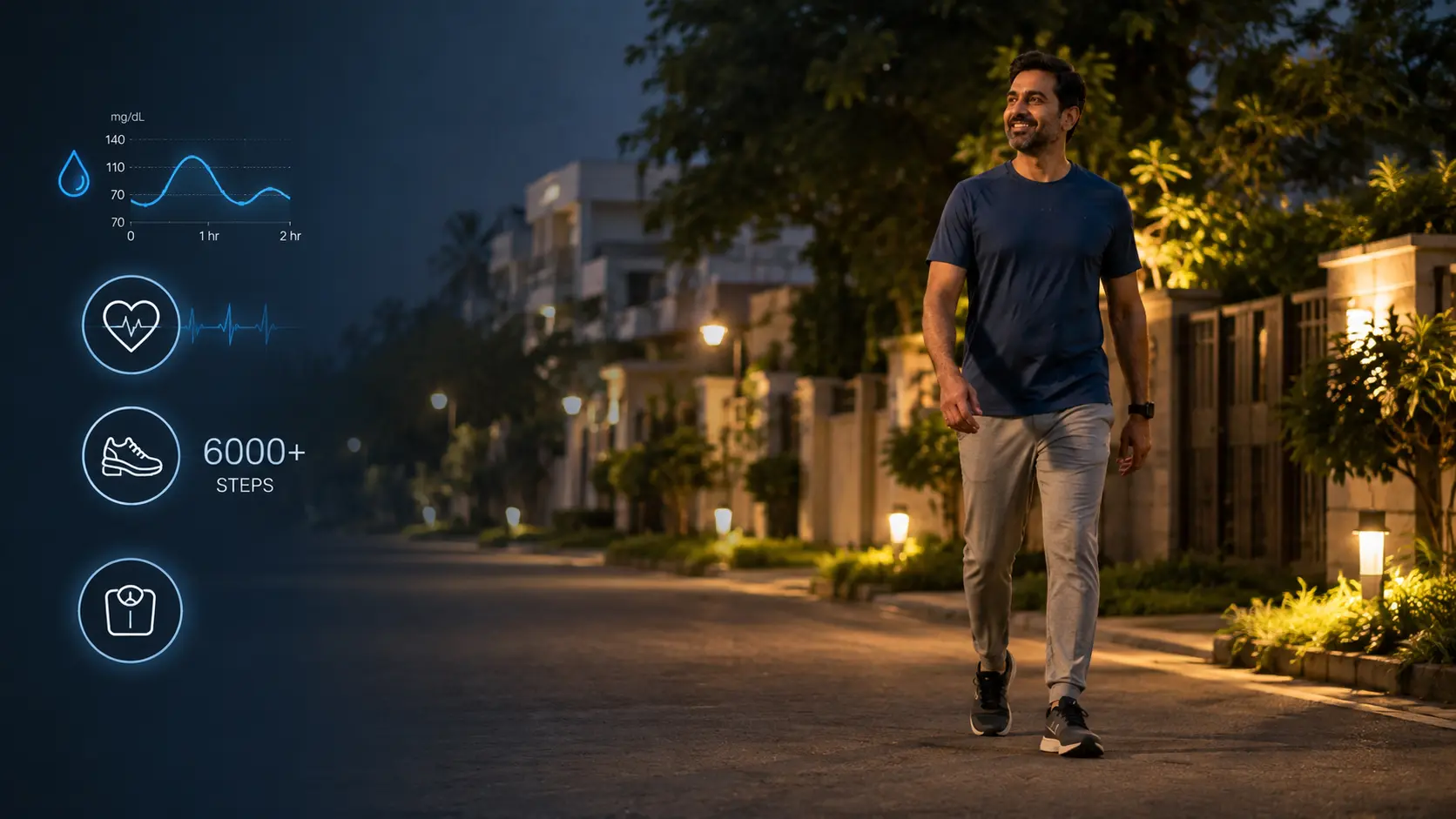
The walking after dinner benefits can include better post-meal blood sugar control, increased daily physical activity, improved digestion for some people, and support for healthy weight management. Even a short, comfortable walk after eating may be useful, particularly when it becomes a consistent part of an overall active lifestyle.
Why Walking After Dinner Is Worth Considering
Dinner often marks the point when physical activity drops for the day.
You eat, sit down, watch television, work on your phone or head to bed.
That routine may feel comfortable, but a simple change can add useful movement to your evening: take a short walk after dinner.
You don’t necessarily need a gym, special equipment or an intense workout.
A comfortable walk around your neighbourhood, building, terrace or home can help you accumulate physical activity while potentially reducing the rise in blood glucose that occurs after a meal.
For people managing diabetes or trying to become more active, this makes an after-dinner walk particularly interesting.
What Happens When You Walk After Eating?
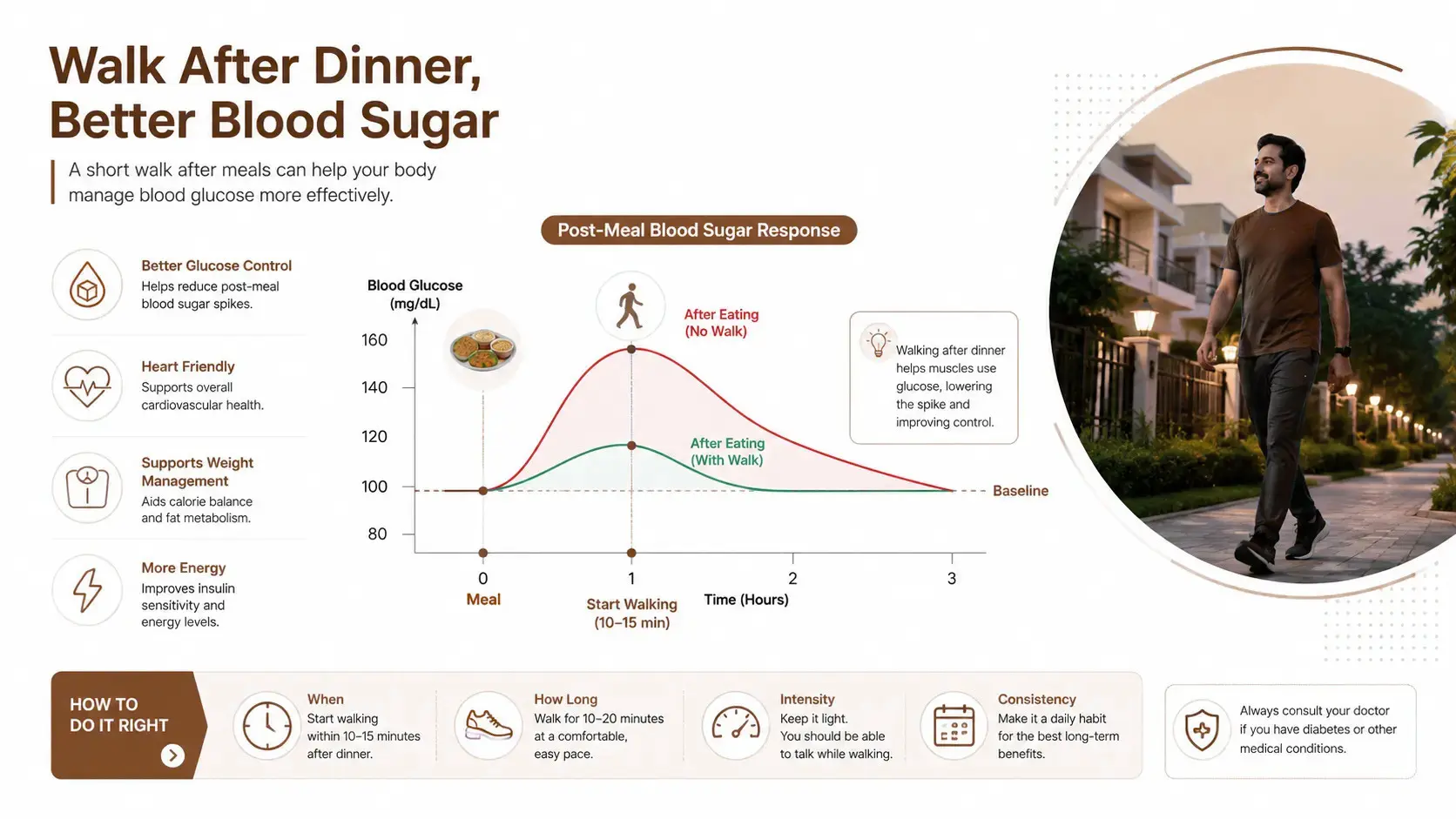
After a meal, carbohydrates are digested into glucose, causing blood glucose levels to rise.
Your body responds by releasing insulin, which helps move glucose from the bloodstream into cells.
Your muscles also use glucose when they contract.
Walking therefore provides your muscles with an opportunity to use some of the circulating glucose.
This is one reason walking after dinner benefits may be particularly relevant to people concerned about post-meal blood sugar.
You don’t need to walk quickly.
Even light-to-moderate movement can be useful when performed consistently.
7 Potential Walking After Dinner Benefits
1. It May Help Manage Post-Meal Blood Sugar
This is one of the most useful reasons to consider walking after dinner.
Research on post-meal exercise has found that physical activity performed after eating can reduce post-meal glucose excursions compared with remaining inactive.
The effect depends on factors such as:
- Walking intensity
- Duration
- Meal composition
- Individual metabolism
- Medication
- Timing
- Existing fitness level
For people with diabetes, this can be especially relevant.
However, an evening walk should be considered one part of diabetes management, not a replacement for prescribed medication, dietary advice or glucose monitoring.
2. It Adds More Daily Physical Activity
You don’t have to complete all your exercise in one session.
A 10–20 minute walk after dinner adds movement to your day without requiring a major schedule change.
For example:
10-minute walk after breakfast
+
10-minute walk after lunch
+
15-minute walk after dinner
can contribute meaningful activity over the course of a day.
For someone currently doing very little physical activity, starting with a manageable walk may be easier than attempting an intense workout routine.
3. It Can Support Weight Management
Walking uses energy, and increasing your daily physical activity can contribute to energy expenditure.
But there is an important distinction:
Walking after dinner does not automatically cause weight loss.
Weight change is influenced by your overall energy intake, activity, sleep, body composition and other factors.
A short evening walk can support a weight-management plan, particularly when it replaces sedentary time.
For example, walking after dinner instead of immediately sitting for an hour can gradually increase your overall daily movement.
If weight loss is your goal, combine regular activity with an appropriate nutrition plan.
4. It May Support Digestion
Some people find that gentle movement after eating feels more comfortable than immediately lying down or remaining completely sedentary.
Walking may encourage normal gastrointestinal movement and can be a pleasant way to transition from dinner into the evening.
However, avoid turning this into an exaggerated claim that walking “digests your food faster” or prevents all digestive problems.
If you experience persistent:
- Abdominal pain
- Severe bloating
- Vomiting
- Reflux
- Difficulty swallowing
speak with a healthcare professional rather than relying on walking as treatment.
5. It Can Reduce Sedentary Time
One of the overlooked walking after dinner benefits is simply breaking up prolonged sitting.
Modern routines often involve long periods of:
- Desk work
- Television
- Phone use
- Driving
- Computer use
A short evening walk interrupts that sedentary pattern.
Even if the walk isn’t intense enough to feel like a formal workout, it still represents movement.
This matters because overall health isn’t determined only by whether you complete one workout.
Your total movement throughout the day matters too.
6. It Can Become a Sustainable Evening Habit
The best exercise routine isn’t necessarily the most intense one.
It’s the one you can maintain.
A post-dinner walk has a practical advantage: it can be attached to an existing daily habit.
For example:
Dinner → clear the table → put on shoes → walk for 15 minutes
Over time, this sequence can become automatic.
You can also make it social:
- Walk with your spouse
- Walk with friends
- Take a family walk
- Walk while listening to a podcast
- Walk around a nearby park
The goal is to make movement easy enough to repeat.
7. It May Help You Establish a Healthier Evening Routine
A walk can create a useful transition between eating and bedtime.
Instead of moving directly from dinner to television or prolonged phone use, walking provides an opportunity to:
- Get outside
- Move your body
- Reduce sedentary time
- Spend time with family
- Establish a consistent evening routine
However, individual responses vary, particularly when it comes to sleep.
Some people find gentle evening activity relaxing, while very vigorous exercise close to bedtime may feel stimulating.
For most people, a comfortable walk is unlikely to be an issue, but your own response matters.
Walking After Dinner vs Sitting After Dinner
After dinner |
Walking |
Sitting |
|---|---|---|
Physical activity
|
Increased
|
Minimal
|
Muscle activity
|
Increased
|
Low
|
Post-meal glucose
|
May be lower
|
May remain higher
|
Energy expenditure
|
Increased
|
Very low
|
Sedentary time
|
Reduced
|
Increased
|
Equipment needed
|
None
|
None
|
Accessibility
|
Generally easy
|
Very easy
|
The comparison isn’t meant to suggest that sitting after dinner is inherently harmful every time.
Rather, if you have the choice between 10–20 minutes of comfortable walking and additional sedentary time, walking can be a simple way to increase movement.
How Long Should You Walk After Dinner?
There is no single duration that works for everyone.
A practical starting point is:
Beginner
10 minutes
Comfortable routine
15–20 minutes
More active individual
20–30 minutes
You don’t have to start with 30 minutes.
If you’re currently inactive, even a short walk can be a useful starting point.
The key is consistency.
How Fast Should You Walk?
For most people, a comfortable or moderate pace is sufficient for an after-dinner walk.
You should be able to walk without feeling excessively breathless.
A simple way to judge intensity is the talk test.
Easy pace
You can speak comfortably without interruption.
Moderate pace
You can talk but notice that you’re breathing somewhat harder.
Vigorous pace
Talking becomes difficult.
For an after-dinner routine, there is usually no need to turn the walk into a sprint.
When Should You Walk After Dinner?
You don’t necessarily need to wait for a long period after finishing dinner.
Research examining post-meal activity suggests that activity relatively soon after eating can be useful for controlling post-meal glucose.
For practical purposes, many people can begin with a gentle walk around 10–30 minutes after dinner, depending on comfort and the meal.
If a large meal makes you feel uncomfortable, wait until you feel ready.
Your routine should be comfortable enough to repeat.
Walking After Dinner for Diabetes
This is one of the strongest applications of the topic.
After eating, blood glucose naturally rises.
Physical activity recruits working muscles, which can increase glucose uptake.
For people with diabetes, post-meal walking may therefore be a useful strategy for managing post-meal glucose levels.
However, individual responses can vary significantly.
If you take insulin or medications that can cause low blood glucose, discuss exercise timing and glucose monitoring with your healthcare professional.
Don’t change medication because of walking alone.
Instead, treat walking as an additional lifestyle strategy within your existing diabetes-care plan.
You can also explore our related guide:
Walking After Dinner for Weight Loss
Searches around evening walking often come from people hoping to lose weight.
Here’s the honest answer:
Walking can contribute to weight loss, but there is no special fat-burning effect that makes a post-dinner walk uniquely capable of losing belly fat.
The main benefit is that it increases physical activity.
For example, if walking after dinner becomes a daily habit, it can increase your weekly activity without requiring a separate gym session.
Combine this with:
- Appropriate calorie intake
- Adequate protein
- Plenty of vegetables
- Good sleep
- Regular physical activity
- Strength training when appropriate
This creates a more complete weight-management strategy.
Can Walking After Dinner Reduce Belly Fat?
Not specifically.
Your body doesn’t allow you to choose exactly where fat is lost.
A post-dinner walk can increase physical activity and energy expenditure, which may support overall fat loss when combined with an appropriate calorie deficit.
But claims such as:
“Walk for 15 minutes after dinner and burn belly fat”
are too simplistic.
A more accurate message is:
Regular walking can support overall physical activity and weight management, but fat loss occurs across the body according to individual biology.
Does Walking After Dinner Help With Blood Pressure?
Regular physical activity can contribute to cardiovascular health and blood-pressure management.
However, one short walk should not be presented as a treatment for hypertension.
The bigger benefit comes from making physical activity a consistent part of your lifestyle.
If you have hypertension or cardiovascular disease, follow your healthcare professional’s recommendations regarding exercise intensity.
What About Walking After Dinner for Sleep?
The relationship between evening walking and sleep isn’t as straightforward as blood glucose.
A relaxing walk may help some people wind down and establish a predictable evening routine.
However, sleep quality depends on many factors:
- Caffeine
- Stress
- Screen exposure
- Exercise
- Bedroom environment
- Sleep schedule
- Medical conditions
Don’t use walking as a treatment for persistent insomnia.
If sleep problems continue for weeks or interfere with daily life, discuss them with a healthcare professional.
A Simple 15-Minute After-Dinner Walking Plan
If you want to start, keep it simple.
Minute 0–3: Easy walking
Start slowly and allow your body to settle into movement.
Minute 3–12: Comfortable pace
Walk at a pace that feels sustainable.
Minute 12–15: Gradually slow down
Finish at an easy pace.
You don’t need special equipment.
Wear comfortable shoes and choose a safe walking route.
7-Day Walking After Dinner Challenge
You could start with a simple one-week routine.
Day |
Walking target |
|---|---|
Monday
|
10 minutes
|
Tuesday
|
10 minutes
|
Wednesday
|
15 minutes
|
Thursday
|
15 minutes
|
Friday
|
15 minutes
|
Saturday
|
20 minutes
|
Sunday
|
20 minutes
|
The goal isn’t to achieve a perfect number.
The goal is to create a habit that you can continue beyond seven days.
How to Make the Habit Easier
Keep your shoes ready
Place them somewhere visible.
Walk with someone
Social accountability can make the habit more enjoyable.
Use a step counter
Tracking can provide useful feedback.
Don’t chase speed immediately
Build consistency first.
Have a backup plan
If weather is poor, walk indoors or around a safe indoor space.
Connect it to dinner
Make the walk part of the meal routine.
Who Should Be Careful With After-Dinner Walking?
Walking is generally accessible, but it isn’t appropriate to assume that everyone should follow the same exercise plan.
Speak with a healthcare professional before starting or significantly increasing exercise if you have:
- Significant heart disease
- Severe breathing problems
- Serious mobility limitations
- Recurrent dizziness
- Uncontrolled medical conditions
- Significant foot problems
- A history of exercise-related symptoms
People with diabetes should also consider their medications and risk of hypoglycemia.
Stop exercising and seek medical attention for concerning symptoms such as chest pain, severe breathlessness or fainting.
Common Mistakes
Walking too intensely after a heavy meal
You don’t need an intense workout immediately after dinner.
Expecting rapid weight loss
A short walk is one component of a larger lifestyle.
Focusing only on steps
Steps are useful, but overall activity, intensity and consistency also matter.
Ignoring nutrition
Walking cannot completely compensate for a consistently poor diet.
Stopping after a few days
The potential benefits come from repeated activity rather than one evening walk.
Frequently Asked Questions
Yes. A short, comfortable walk after dinner can increase physical activity, reduce sedentary time and may help moderate post-meal blood glucose. It can be particularly useful when performed consistently.
A practical starting point is 10–15 minutes. If comfortable, you can gradually increase the duration to 20–30 minutes. There is no requirement to complete a long walk immediately after every meal.
It may help manage post-meal blood glucose because active muscles use glucose. However, people with diabetes should consider their medications, glucose levels and individual medical circumstances.
Walking can contribute to overall physical activity and weight management, but it cannot specifically target belly fat. Fat loss occurs according to overall energy balance and individual physiology.
Many people can take a gentle walk relatively soon after eating. If you feel overly full or uncomfortable, wait until you feel ready. Avoid turning a post-meal walk into intense exercise.
Ten minutes is a useful starting point, especially for someone who is currently inactive. Longer or more frequent activity can provide additional benefits, but consistency is important.
Gentle movement may feel comfortable and can support normal gastrointestinal activity for some people. However, walking shouldn’t be considered a treatment for persistent digestive symptoms.