Is Poha Good for Diabetes? The Complete Glycemic & Metabolic Guide
Managing type 2 diabetes or prediabetes often feels like navigating a maze of dietary rules especially when it comes to beloved morning staples like flattened rice. If you are questioning whether is poha good for diabetes, you are not alone.
The short answer is yes, poha can be good for diabetes, provided you choose the right variety, control portion sizes, and combine it with protein, fiber, and healthy fats. Flattened rice is inherently lighter than plain white rice, but its high carbohydrate content requires strategic preparation to prevent post-meal blood sugar spikes.
In this guide, we break down the glycemic index (GI) of poha, compare white, red, and brown varieties, highlight key health trade-offs, and share step-by-step recipes to make your breakfast completely diabetes-friendly.
Direct Answer: Is Poha Good for Diabetes?
Is poha good for diabetes? Yes, poha can be safely included in a diabetic diet when managed with portion control and proper pairing. Standard white poha has a moderate-to-high glycemic index (GI 65–70), but using red or brown poha (GI ~55) and pairing it with fiber-rich vegetables, nuts, and protein slows digestion, stabilizing blood glucose levels.
Understanding Poha: Glycemic Index, Glycemic Load, and Nutrition
To determine if is poha good for diabetes, we must look at how processing changes raw rice into flattened flakes.
Poha is produced by parboiling rice, flattening it under heavy rollers, and drying it into flakes. This partial cooking (parboiling) gelatinizes the starch, making it easier to digest compared to untreated white rice. However, fast digestion can cause rapid glucose absorption if consumed plain.
Raw Paddy Rice ➔ Parboiling (Partial Starch Gelatinization) ➔ Rolling/Flattening ➔ Dried Flakes (Poha)
The Numbers: Glycemic Index (GI) and Glycemic Load (GL)
- Glycemic Index (GI): Measures how rapidly a food raises blood glucose on a scale of 0 to 100.
- Low GL: ≤55
- Medium GL: 56–69
- High GL: ≥70
- Glycemic Load (GL): Factors in the portion size to show real-world blood sugar impact.
- Low GL: ≤10
- Medium GL: 11-19
- High GL: ≥20
Standard white poha has a moderate-to-high GI (~65–70). However, a standard cooked bowl (~50g dry weight) yields a moderate Glycemic Load of 12–15, making it far safer for blood sugar control than plain white rice or sweetened breakfast cereals.
White Poha vs. Red Poha vs. Brown Poha vs. Millet Poha
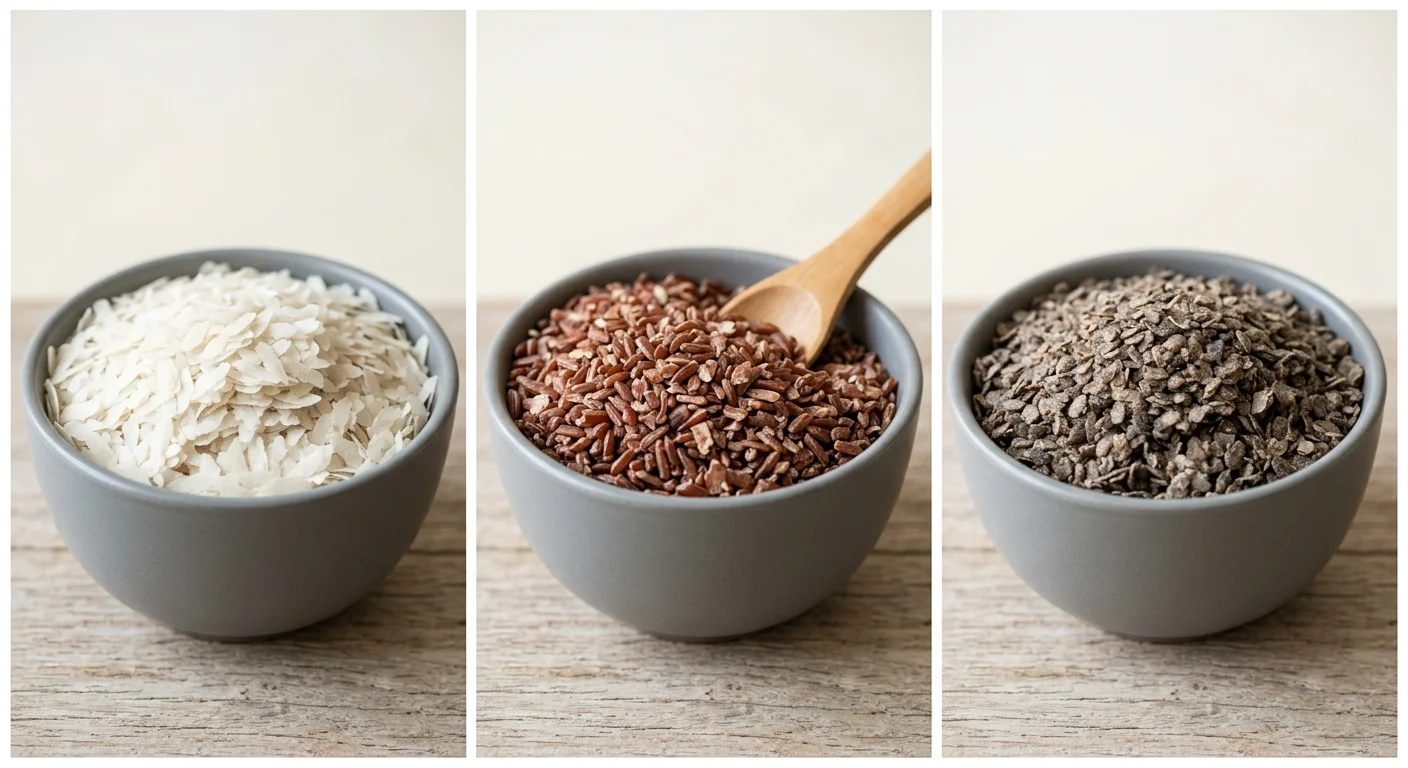
Not all poha is created equal. The source grain dictates the final fiber content, micronutrient density, and glycemic response.
Diabetic Suitability Ranking:
Millet Poha (Best) > Red Poha > Brown Poha > Thick White Poha > Thin White Poha (Worst)
1. Red Poha (Made from Red Rice)
- GI: ~55 (Low)
- Why it excels: Red rice retains its outer bran layer, which is rich in dietary fiber and powerful antioxidants called anthocyanins. Anthocyanins help reduce systemic inflammation a key driver of insulin resistance in type 2 diabetes.
2. Brown Poha (Made from Whole Brown Rice)
- GI: ~58–63 (Low-to-Medium)
- Why it excels: Provides nearly 3x the dietary fiber of white poha (approx. 6g fiber per 100g). Fiber slows down the breakdown of carbohydrates into simple sugars, smoothing out insulin curves.
3. Millet Poha (Ragi, Jowar, or Foxtail Millet)
- GI: ~40–50 (Low)
- Why it excels: Made entirely without rice, millet flakes offer high non-starchy fiber, calcium, and complex plant proteins that promote long-lasting satiety.
4. White Poha (Thick vs. Thin)
- GI: ~65–70 (Medium to High)
- Why to be cautious: Polished white rice loses its bran and germ during processing, leaving mostly starch. Thin white poha digests very rapidly and is most likely to cause sharp glucose spikes.
Nutritional Parameter |
White Poha |
Red Rice Poha |
Brown Rice Poha |
Foxtail / Ragi Poha |
|---|---|---|---|---|
Glycemic Index (GI)
|
65–70 (Medium-High)
|
~55 (Low)
|
58–63 (Medium)
|
40–50 (Low)
|
Calories (kcal)
|
354 kcal
|
350 kcal
|
345 kcal
|
320–335 kcal
|
Carbohydrates
|
~77–80g
|
~74–77g
|
~74g
|
~65–70g
|
Dietary Fiber
|
~1.5g (Very Low)
|
~4.5–6g (Moderate)
|
~6.2g (High)
|
~8.0–11g (Very High)
|
Protein
|
6.5g
|
7.8g
|
7.5g
|
8.5–11g
|
Key Micronutrients
|
Fortified Iron, B-Vitamins
|
Anthocyanins, Iron, Zinc
|
Phenolic Acids, Magnesium
|
Calcium, Poly-phenols
|
Health Benefits of Poha for Diabetes Management
When prepared properly, including poha in a diabetes management plan offers distinct metabolic advantages over other fast-food or refined options:
- Probiotic Properties: Traditional parboiling and drying involve light natural fermentation, producing beneficial probiotics that support gut microbiome diversity and metabolic health.
- Easy on the Stomach: Poha is light, easily digestible, and naturally gluten-free, preventing digestive sluggishness and inflammation.
- Rich in Bioavailable Iron: Flattening rice between iron rollers (and commercial fortification) infuses poha with iron, making it helpful for preventing fatigue and anemia.
- High Meal Customizability: Unlike bread or pre-packaged cereals, poha acts as a blank canvas, allowing you to easily add non-starchy vegetables, seeds, and healthy proteins.
Limitations & Potential Risks for Diabetics
To maintain transparency, asking is poha good for diabetes means acknowledging its clear dietary risks when prepared incorrectly:
- Carbohydrate Density: Poha is predominantly carbohydrate-based. Overeating large portions will spike blood sugar regardless of whether it is white, brown, or red.
- Low Native Protein: On its own, raw poha contains minimal protein and fiber, leading to rapid gastric emptying if eaten unmixed.
- High-Starch Regional Additions: Popular regional recipes often include high-GI ingredients. For example, traditional Kanda Batata Poha adds high-starch potatoes, while Indori Poha often adds added sugar and deep-fried sev (farsan).
Case Study: White Poha vs. Modified Diabetes-Friendly Poha
Consider the blood sugar response of two individuals with Type 2 Diabetes eating different preparations of flattened rice:
Scenario A (Traditional Street Poha):
100g Thin White Poha + Fried Potatoes + Sugar + Sev
RESULT: High Blood Sugar Spike (Post-meal Glucose: >210 mg/dL)
Scenario B (Nutrient-Buffered Poha):
50g Red Rice Poha + Mixed Veggies + Boiled Sprouts + Roasted Peanuts
RESULT: Controlled, Gradual Glucose Curve (Post-meal Glucose: <140 mg/dL)
By reducing the net refined carbohydrates by half and adding protein and soluble fiber, Scenario B slows digestion, allowing insulin to process glucose efficiently without dangerous spikes.
Step-by-Step Blueprint: Cooking Diabetes-Friendly Poha
Follow this exact formula to transform high-carb flattened rice into a stable, glycemic-balanced meal:
Ingredients:
- 50g Dry Red or Brown Rice Poha
- 1/2 cup Green Peas, Chopped Capsicum, Carrots, and Beans
- 1/4 cup Boiled Sprouts or Boiled Black Chickpeas (Kala Chana)
- 1 tbsp Roasted Peanuts or Pumpkin Seeds
- 1 tsp Mustard seeds, Curry leaves, and Green Chilies
- 1 tsp Cold-pressed Mustard or Olive oil
- Lemon juice and fresh coriander for garnish
Instructions:
- Rinse & Drain: Place red or brown poha in a colander. Rinse lightly under cold running water for 30–45 seconds. Do not soak, or it will become mushy. Set aside.
- Sauté Aromatics: Heat 1 tsp of oil in a pan. Add mustard seeds, curry leaves, green chilies, and peanuts. Sauté until fragrant.
- Cook Non-Starchy Veggies: Add the chopped carrots, capsicum, and green peas. Cover and steam for 3–4 minutes on low heat until tender-crisp.
- Boost the Protein: Stir in the boiled sprouts or black chickpeas (kala chana).
- Combine & Steam: Add the rinsed poha, salt, and turmeric. Mix gently. Cover and allow it to steam on low heat for 2 minutes.
- Finish with Vitamin C: Remove from heat and squeeze fresh lemon juice over the top. Note: Squeezing lemon off the heat helps preserve Vitamin C, which enhances iron absorption from the poha.
Essential Monitoring Tools for Diabetic Meal Planning
When adding new complex carbohydrate meals to your diet, use these modern health management platforms to monitor your progress:
- Continuous Glucose Monitors (CGMs): Devices like FreeStyle Libre or Dexcom help you track real-time post-prandial (post-meal) blood sugar readings after eating poha.
- Nutritional Tracking Apps: Use platforms like MyFitnessPal or Cronometer to weigh your raw poha and track net carbs and fiber accurately.
- Smart Kitchen Scales: Measuring dry poha by weight (aiming for 40–50g) is far more accurate than using measuring cups.
Frequently Asked Questions
While red or brown poha can be part of a healthy diet, eating it daily is not recommended. Diversifying your morning meals with lower-carb options like besan chilla, paneer bhurji, or oats omelets prevents excessive weekly carbohydrate loads.
Prediabetics can eat white poha occasionally, provided it is thick-flake white poha prepared with plenty of vegetables, protein (sprouts/peanuts), and strict portion control (max 40g dry weight).
Breakfast is the ideal time. Insulin sensitivity is naturally higher in the morning, and daytime physical activity helps your muscles burn off the incoming glucose. Avoid eating carbohydrate-dense poha late at night.
Lemon juice contains citric acid, which can slow down carbohydrate digestion and gastric emptying. Squeezing lemon over your poha off the heat also boosts non-heme iron absorption.
Rolled or steel-cut oats generally have a higher soluble fiber (beta-glucan) content and a lower glycemic index than standard white poha, making them slightly better for strict glucose management. However, red rice poha or millet poha offers comparable blood sugar stability.
It is best to avoid potatoes. Potatoes are high-glycemic starches that compound the carb load of flattened rice. Swap potatoes for diced boiled cauliflower, green peas, or paneer cubes.
Conclusion
So, is poha good for diabetes? When prepared thoughtfully, flattened rice does not have to be off-limits for people managing diabetes.
By switching from refined white poha to fiber-dense red or brown rice flakes, keeping portion sizes around 50 grams, and pairing your meal with non-starchy vegetables and lean plant proteins, you can enjoy this classic dish while keeping your blood sugar stable.
Take Action Today: Evaluate your current breakfast routine. Try swapping white poha for organic red rice poha this week, load it with your favorite vegetables and sprouts, and track your post-meal glucose level to see the positive impact firsthand!